
When do I use a screening bucket?
A screening bucket for excavators and mini excavators is used when different material sizes need to be separated directly with the excavator. Typical applications include screening earth, topsoil, sand, gravel, or suitable demolition material.
This allows existing material to be processed directly on the construction site and, depending on the material and intended use, partially reused.
→ View screening buckets for excavators & mini excavators
What is a screening bucket?
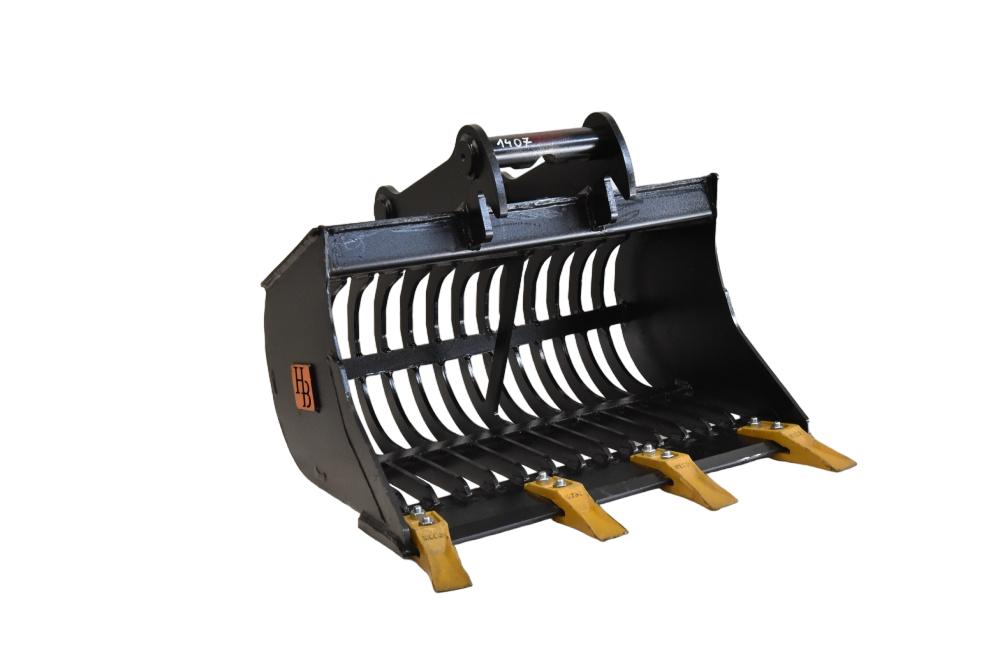
A screening bucket is an excavator attachment with openings or gaps in the bucket body. When picking up and moving material, smaller components can fall through these openings, while larger components remain in the bucket.
In contrast to a closed digging bucket, the screening bucket focuses not only on picking up and moving, but especially on separating and sorting material.
What is a screening bucket used for?
Depending on the design, screen spacing, and material, a screening bucket is suitable for various tasks.
1. Screening earth and topsoil
A typical application is the processing of earth or topsoil. Larger stones, roots, and other coarse components can be separated from the finer soil.
This is particularly interesting in gardening and landscaping, when existing soil needs to be prepared for further work.
2. Sorting stones from soil
If excavated soil contains many stones, a screening bucket can help to separate coarser components from finer material.
The screened material can then – if suitable for the respective application – be reused directly on the construction site.
3. Sorting sand and gravel
A screening bucket can also be used to separate different material sizes for sand, gravel, and similar bulk materials. The spacing of the screen elements or struts is crucial here.
4. Presorting suitable demolition material
For suitable materials from demolition or dismantling work, a screening bucket can also be used for presorting.
It must always be considered whether the screening bucket used and the material are suitable for the respective application.
What are the advantages of a screening bucket?
The main advantage is that material can be separated directly with the excavator. Depending on the construction site and material, various advantages can arise:
- Process material directly on site: Suitable material does not necessarily have to be separately processed for each further work step.
- Reuse of existing material: Screened soil or other suitable material can potentially be reused on the construction site.
- Fewer unnecessary transports: If material can be separated and reused on site, transports and disposal quantities can be reduced depending on the project.
- Versatile use: screening buckets can be used, for example, for earthworks, in gardening and landscaping, and for suitable sorting tasks.
What screen size or mesh spacing do I need?
The appropriate spacing between the screen elements depends on which material size is to be screened out.
Smaller spacings retain correspondingly smaller components, while larger spacings allow more material to pass through. Therefore, the desired material separation should be considered before purchasing.
Which screening bucket fits my excavator?
In addition to the size, weight, and design of the screening bucket, the appropriate excavator mount is particularly crucial.
A screening bucket must fit the existing mount or quick coupler of your excavator. The excavator designation alone is not always sufficient for reliable determination.
If you do not know which mount is installed on your excavator, you can use our mount finder:
→ Determine excavator mount with the mount finder
Further information on identification can also be found in our guide:
→ Which excavator mount do I have?
What mounts are available for screening buckets?
At Heinz Baumaschinen, you will find screening buckets for various common mounting systems and excavator classes. Which variants are currently available, you can see directly in our screening bucket category.
→ View available screening buckets
Information on various MS and CW mounts can be found here:
- MS01, MS03, MS08, MS10 & MS21 – Dimensions and differences
- CW05, CW10, CW20, CW30 & CW40 – Dimensions and differences
screening bucket or digging bucket – what's the difference?
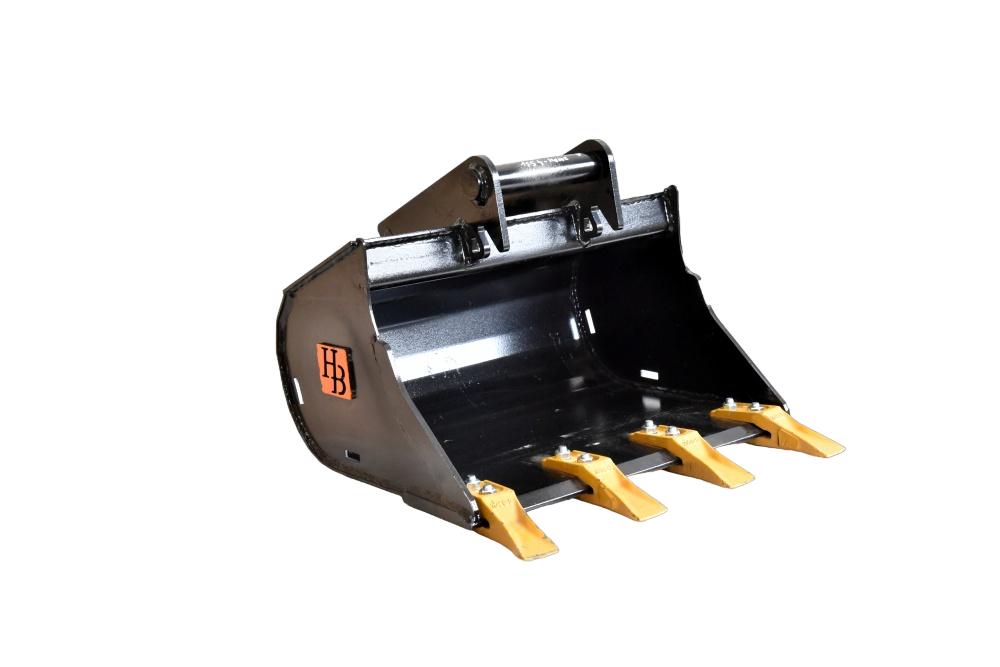
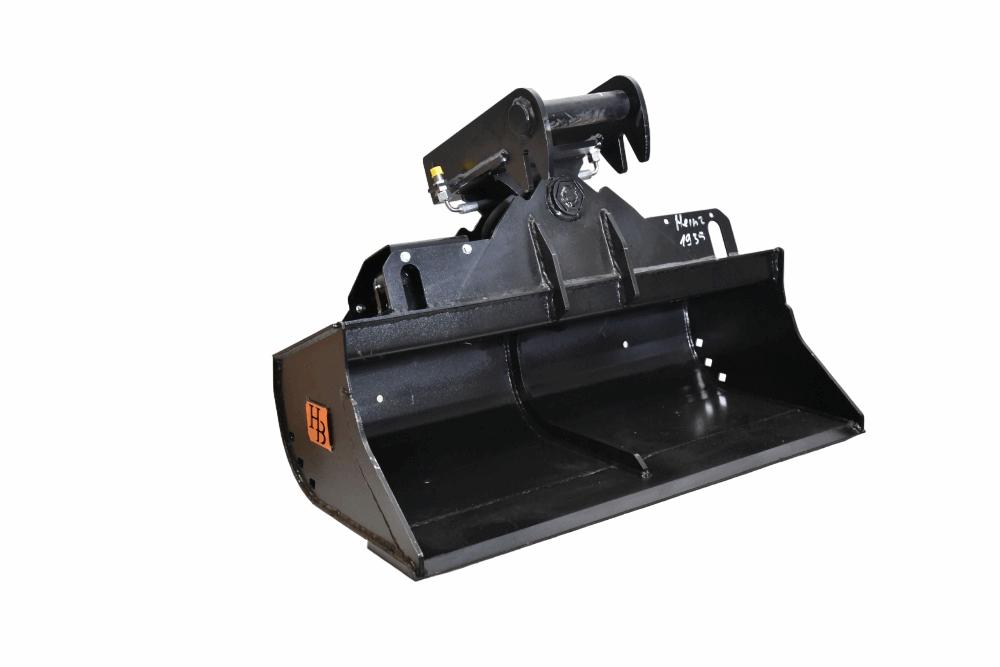
A digging bucket generally has a closed bucket body and is primarily used for loosening, picking up, and moving earth and other suitable materials.
A screening bucket, on the other hand, has openings or gaps through which smaller material components can fall. It is therefore mainly used when material needs to be separated or sorted.
→ View digging buckets | → View screening buckets
When is a screening bucket worthwhile?
A screening bucket is particularly interesting when soil or other suitable materials need to be regularly separated by size. The more frequently material can be processed directly on the construction site and sensibly reused, the greater the practical benefit can be.
Whether a screening bucket is suitable for a specific project depends, among other things, on the material, desired screening, excavator size, mount, and frequency of use.
Conclusion: screening bucket for separating and sorting material
A screening bucket is the right choice when earth, stones, sand, gravel, or other suitable materials need to be separated by size directly with the excavator.
Before purchasing, you should particularly pay attention to the appropriate mount, the size of the screening bucket, and the desired screen spacing.
→ Discover suitable screening buckets now
Still unsure about your mount? Use our mount finder or send us photos and dimensions of your existing mount.
Brand notice: Lehnhoff and Verachtert are trademarks of their respective owners. The mentioned brands and system designations are used exclusively for identification, assignment, and description of the compatibility of mounting systems. Heinz Baumaschinen has no business relationship with the respective brand owners. Unless explicitly stated otherwise, the offered attachments are not original products of the mentioned brand manufacturers.