What is a digging bucket?
A digging bucket for excavators and mini excavators is an attachment used for loosening, picking up, and moving soil and other suitable materials. It is one of the most versatile excavator buckets and is used, among other things, in earthworks, civil engineering, and landscaping.
Digging buckets are available in different widths, sizes, and mounting systems. Therefore, which digging bucket fits your excavator depends not only on the machine but also on the existing hitch and the intended use.
→ View digging buckets for excavators & mini excavators
What is a digging bucket used for?
The digging bucket is primarily used for classic digging and earthmoving tasks. It can be used to loosen, pick up, and then move or load material.
Typical applications include:
- Digging trenches: for pipes, cables, or drainage, for example.
- Excavating foundations: for various construction and earthworks.
- Loosening and picking up soil: for excavation and civil engineering work.
- Gardening and landscaping: for earthworks and designing outdoor areas.
- Loading material: for picking up and moving suitable bulk materials.
How is a digging bucket constructed?
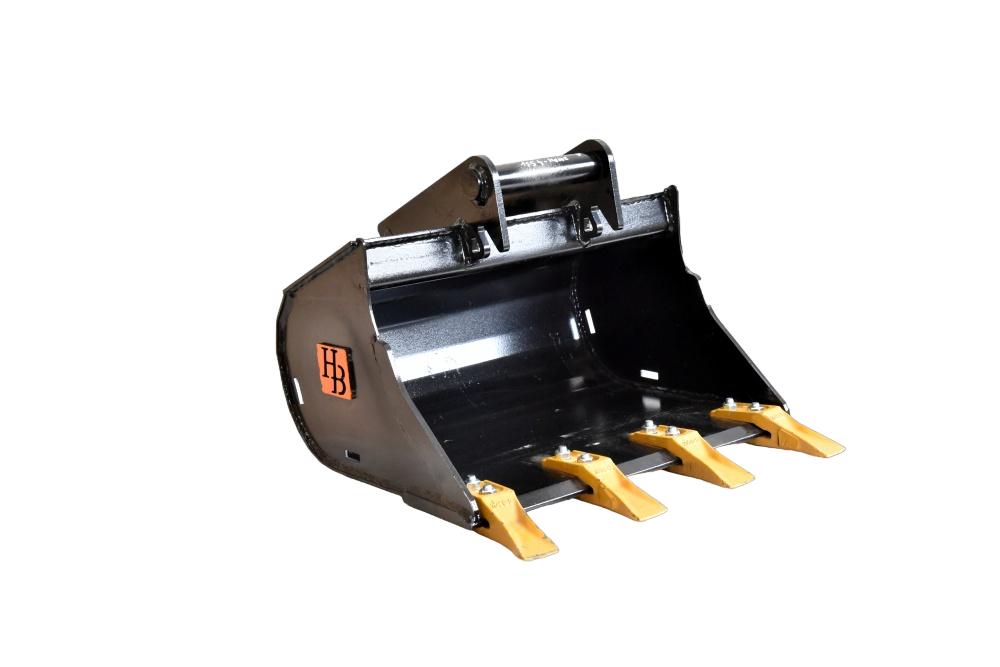
A digging bucket generally consists of a sturdy bucket body, a cutting edge, and the respective hitch for the excavator or quick coupler.
Depending on the design, the digging bucket can also be equipped with teeth. These can be particularly helpful when penetrating firmer or compacted soil.
Digging bucket with teeth or without teeth?
Whether a digging bucket with teeth makes sense depends on the planned use.
Digging buckets with teeth are particularly suitable for jobs where soil needs to be loosened and picked up. The teeth aid penetration into the material.
A version without protruding teeth, on the other hand, can be interesting for jobs where a more even cutting edge is desired. The material, soil conditions, and task always play a decisive role.
What digging bucket width do I need?
The appropriate digging bucket width depends on the intended use, the excavator size, and the local conditions.
A narrow digging bucket is suitable for narrow trenches, for example, while a wider digging bucket can pick up more material per pass under suitable conditions.
However, it does not automatically mean "the wider, the better." As the bucket size increases, the weight and volume of material picked up can also increase. Therefore, the digging bucket must match the machine and the intended use.
Which digging bucket fits my excavator?
Several points should be considered when making your selection:
- Excavator size and weight class
- Existing hitch or quick coupler
- Desired bucket width
- Dead weight of the digging bucket
- Material to be processed
- Planned application
The matching hitch is particularly important. A digging bucket must fit the actual hitch or quick coupler of the excavator.
Which excavator hitch do I need for my digging bucket?
The hitch cannot always be reliably determined solely by manufacturer, excavator model, or weight class. Depending on the equipment, year of manufacture, or retrofitted quick coupler, different hitch systems may be installed.
If you do not know your hitch, you can narrow it down using our hitch finder based on a few measurements.
→ Determine excavator hitch with the hitch finder
You can also find a detailed explanation in our guide:
→ Which excavator hitch do I have?
What hitch systems are available for digging buckets?
Digging buckets are available for various hitch systems. At Heinz Baumaschinen, you will find attachments suitable for, among others, various MS and CW systems, as well as other hitch variants.
Further information on the individual hitches can be found in our guides:
- What excavator bucket hitches are there?
- MS01, MS03, MS08, MS10 & MS21 – Dimensions and differences
- CW05, CW10, CW20, CW30 & CW40 – Dimensions and differences
What is the difference between a digging bucket and a screening bucket?
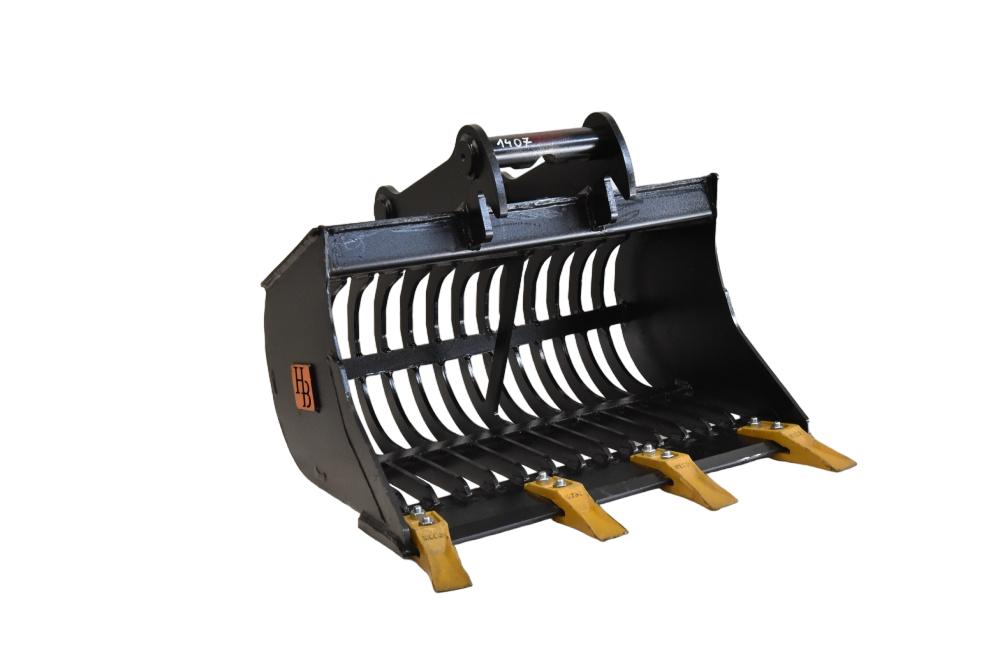
A digging bucket has a largely closed bucket body and is primarily used for loosening, picking up, and moving material.
A screening bucket, on the other hand, has openings or gaps. This allows smaller material components to fall through, while larger components remain in the bucket. It is therefore mainly used for separating and sorting suitable materials.
→ When do I use a screening bucket?
Digging bucket or grading bucket – what's the difference?
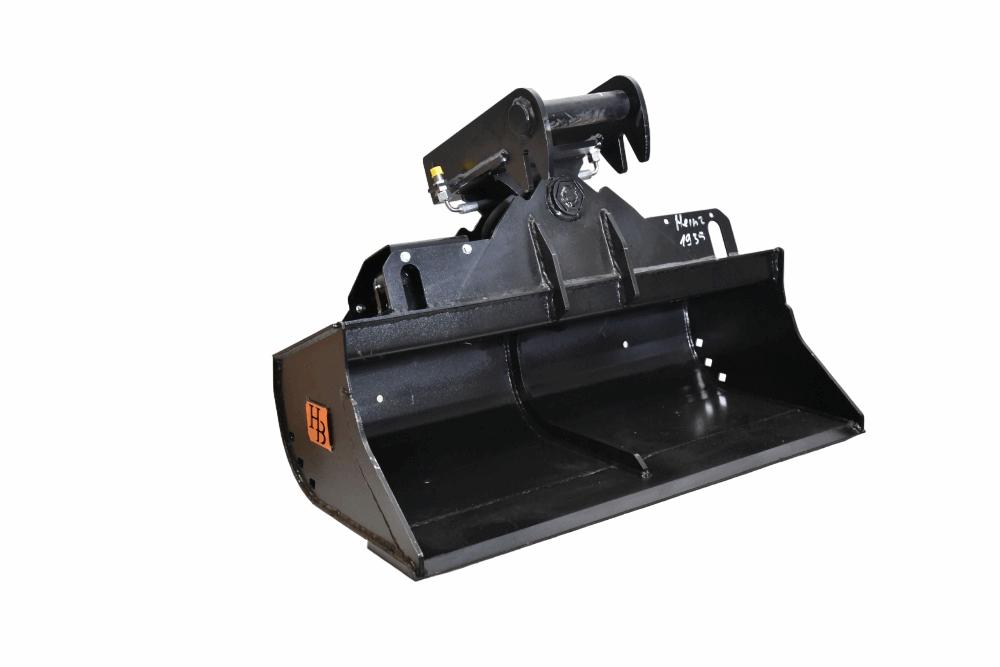
The digging bucket is primarily designed for digging and excavation work. A grading bucket is typically wider and is used, among other things, for clearing, leveling, grading, and profiling.
Hydraulic grading buckets can also be swiveled, allowing for flexible adjustment of the working angle.
→ View hydraulic grading buckets
What should I look for when buying a digging bucket?
Before purchasing, you should particularly check whether the hitch, bucket size, width, and weight are suitable for your excavator and the planned application.
The mere indication of the excavator model is not always sufficient for selecting the hitch. Therefore, compare the actual hitch and its dimensions.
You can find our currently available variants directly in the digging bucket category:
Conclusion: The right digging bucket for every application
A digging bucket is a versatile attachment for digging, excavation, and earthmoving work. Key factors for the correct selection include excavator size, hitch, bucket width, weight, and application area.
If you don't know your excavator hitch yet, first determine it with our hitch finder. Then you can specifically search for a suitable digging bucket.
→ Discover digging buckets at Heinz Baumaschinen
If you are unsure about your selection, you can send us photos of your hitch and the measured dimensions.
Brand notice: Lehnhoff and Verachtert are trademarks of their respective owners. The mentioned brands and system designations are used exclusively for identification, assignment, and description of the compatibility of hitch systems. Heinz Baumaschinen has no business connection with the respective brand owners. Unless explicitly stated otherwise, the offered attachments are not original products of the mentioned brand manufacturers.