
Properly constructing an embankment – slope, drainage, and tools
When constructing an embankment, it's not just about a uniform appearance. The slope, soil conditions, water conditions, loads, and local circumstances must be considered during planning.
Different excavator attachments are used for the actual earthworks, depending on the work step. While a digging bucket may be suitable for excavation, grading buckets are often used for profiling and leveling surfaces.
In this guide, we explain what fundamentally needs to be considered when constructing an embankment and which excavator buckets are suitable for the various work steps.
What is an embankment?
An embankment is an inclined terrain or earth surface. It is formed, for example, by changes in ground level, trenches, construction pits, road and path construction, or when modeling a property.
Depending on the project, an embankment can have different heights, slopes, and surfaces. Therefore, there is no single embankment angle that is suitable for every construction site.
What is the correct embankment angle?
The required embankment angle depends on several factors. These include, in particular, the soil conditions and the specific on-site situation.
Factors to consider include:
- Soil type and condition
- Height of the embankment
- Groundwater and precipitation
- Layers and changes in the soil
- Loads near the embankment
- Adjacent buildings, traffic areas, or other structures
- Intended use and durability of the embankment
Therefore, the embankment angle should not be determined solely by a simple rule of thumb. For construction pits, trenches, and other safety-relevant earthworks, the technical and occupational safety regulations applicable to the respective project must be observed.
In case of unclear soil conditions or demanding embankments, the required design should be professionally planned or assessed.
How to construct an embankment with an excavator?
The exact work process depends on the terrain and the project. In general, however, the work can be divided into rough excavation, profiling, and final finishing.
1. Rough excavation and site preparation
First, the site is prepared according to the planned shape. Larger quantities of material can be removed or relocated, and the future embankment can be roughly established.
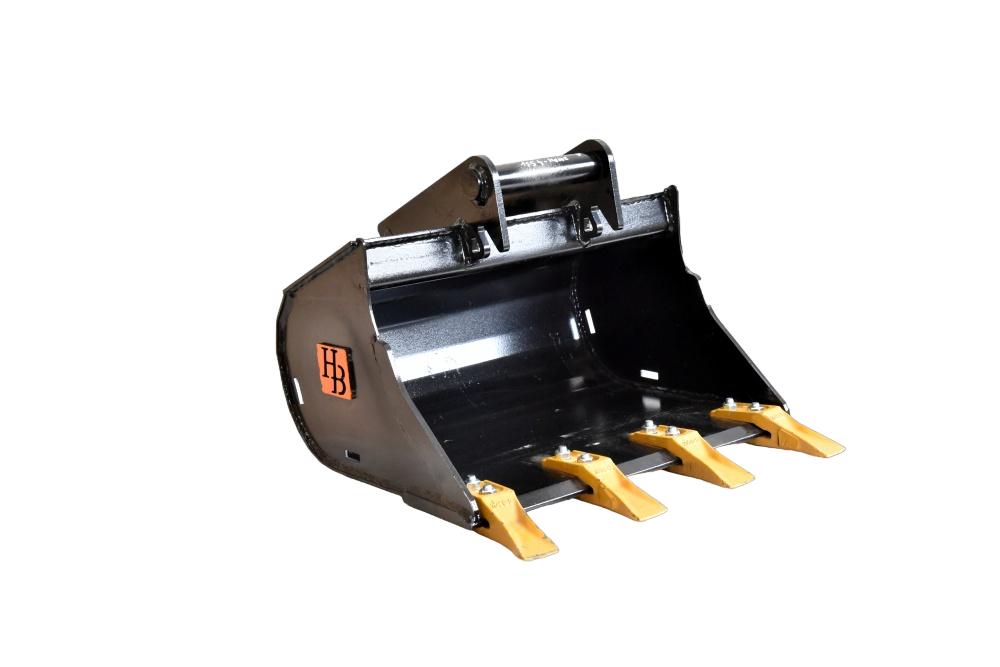
A digging bucket is often used for classic digging and excavation work.
→ View digging buckets for excavators & mini excavators
Further information: What is a digging bucket?
2. Roughly profile the embankment
After excavation, the desired embankment shape is created. Work should be done step-by-step so that the intended slope can be controlled and corrected if necessary.
Which working position with the excavator makes sense depends, among other things, on reach, terrain, embankment height, and local conditions.
3. Level the embankment and create the surface
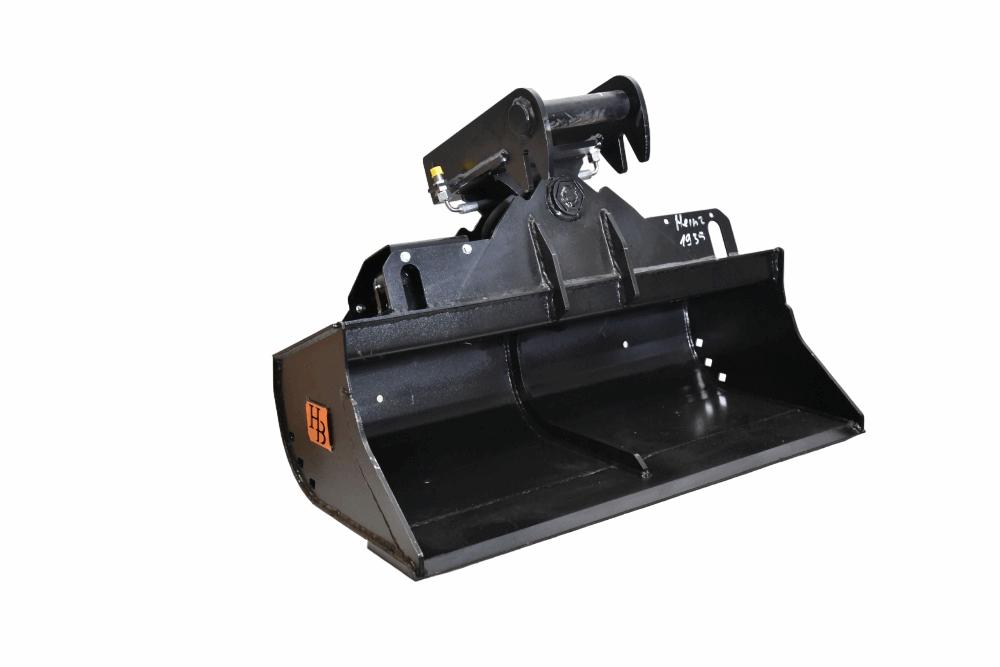
A grading bucket can be used for uniform leveling of larger areas. Due to its wide design, it is suitable for corresponding clearing, leveling, and profiling work.
With a hydraulic grading bucket, the working angle of the bucket can be changed. This can be helpful on inclined surfaces and embankments, as the bucket angle can be adjusted to the respective working situation.
→ View hydraulic grading buckets
→ Grading buckets: Rigid or hydraulic?
Rigid or hydraulic grading bucket for embankments?
Both variants can be used for clearing and leveling work. The main difference lies in the additional swivel function of the hydraulic grading bucket.
With a rigid grading bucket, the working angle is more strongly determined by the position and movement of the excavator.
A hydraulic grading bucket, on the other hand, allows the bucket to be tilted sideways. This makes it more flexible to use for changing ground slopes and when profiling an embankment.
What width should the grading bucket have?
The appropriate bucket width depends on the machine and the specific work task. A wider bucket can process a larger area per work movement, but usually also has a correspondingly different dead weight and volume.
Therefore, the widest available bucket should not be chosen automatically. Excavator, bucket weight, working width, hitch, and application must be technically compatible.
More about the weight of excavator buckets:
→ How much does an excavator bucket weigh?
More reach for embankment work
Depending on the size and location of the embankment, the available reach of the excavator may be limited for certain areas.
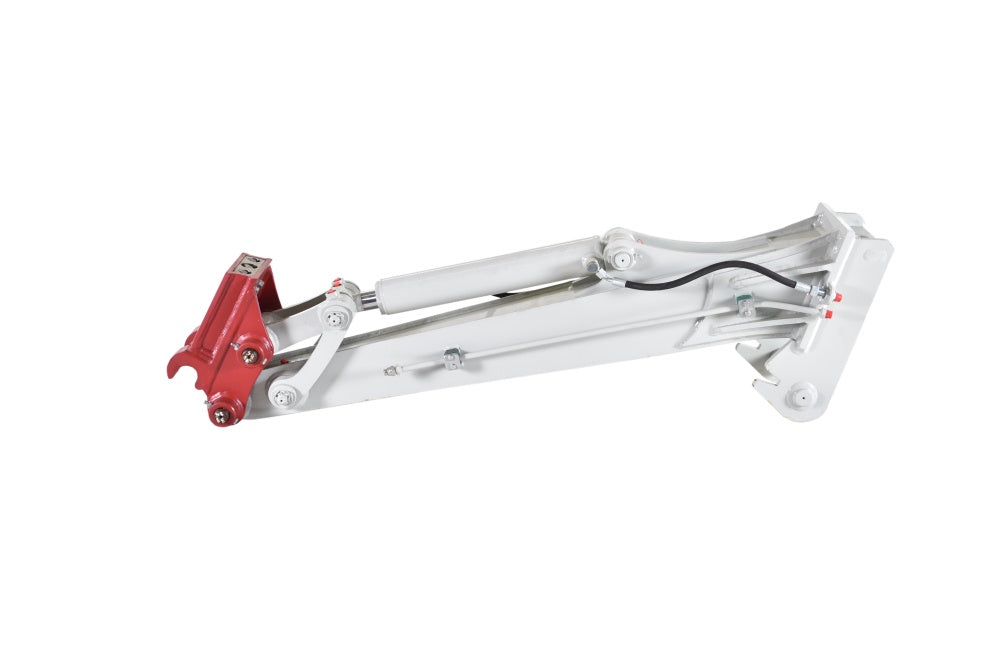
For suitable applications, a boom extension can create additional reach. However, it must be taken into account that the additional length changes the leverage of the excavator.
Boom extension, excavator, and attachment used must therefore be technically compatible with each other.
→ View boom extensions for excavators
→ Guide: Boom extension for excavators – Use, reach & selection
Which excavator hitch do I need?
Regardless of whether a digging bucket, grading bucket, or another attachment is used, the hitch must match the existing excavator or quick coupler.
The correct hitch cannot always be reliably determined solely by the excavator manufacturer, model, or machine weight.
If you don't know your hitch, you can use our hitch finder:
→ Determine excavator hitch with the hitch finder
Further information:
Can a screening bucket be useful in embankment construction?
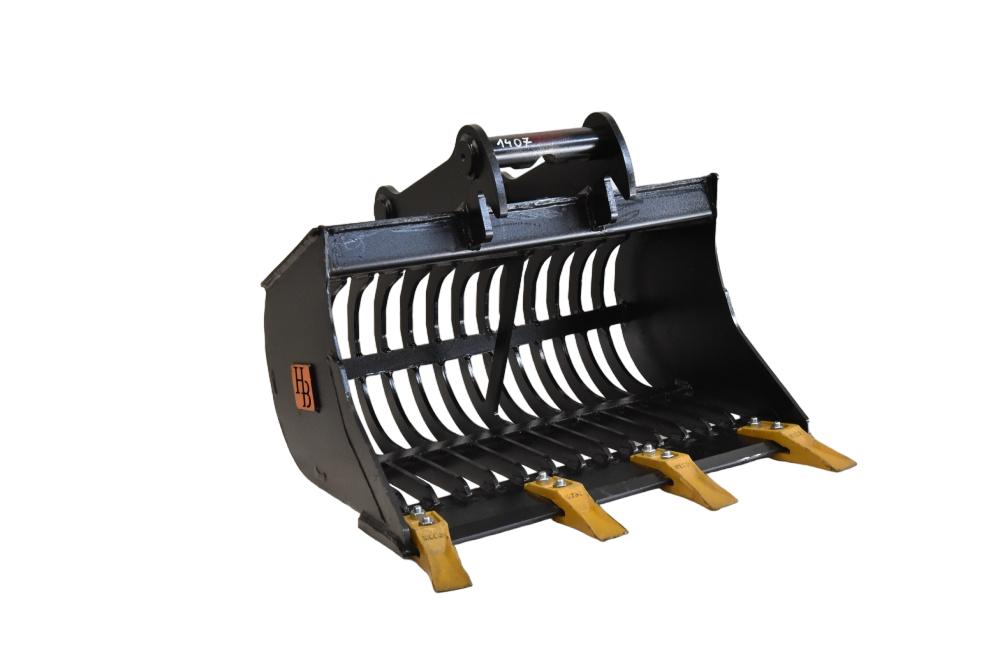
If suitable soil material is to be separated from larger stones or other components before further use, a screening bucket can be used, depending on the material.
However, it does not replace the digging bucket for classic excavation work or the grading bucket for the actual profiling of the embankment.
→ When do I use a screening bucket?
What should be considered when constructing an embankment?
Before and during the work, the following points should be particularly considered:
- determine suitable embankment slope
- consider soil and water conditions
- note loads and surroundings of the embankment
- plan work area and excavator position wisely
- select the appropriate excavator bucket for each work step
- observe permissible machine and attachment combinations
- ensure correct excavator hitch
- observe applicable regulations for safety-relevant work
Conclusion: Plan and construct an embankment with the right tools
An embankment should not be constructed solely based on the desired appearance. Soil conditions, slope, water, loads, and local conditions influence the required design.
A digging bucket can be used for rough excavation, while grading buckets are suitable for corresponding clearing, leveling, and profiling work. A hydraulic grading bucket also offers the option of adjusting the working angle.
→ View hydraulic grading buckets
You don't know your excavator hitch? Use our hitch finder or contact us with photos and dimensions of your hitch.